Summer walks 15% off today!
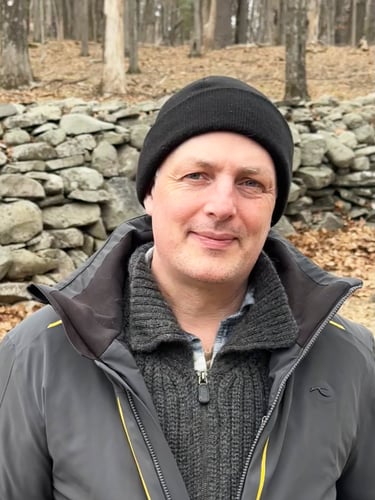
My name is Dwane Decker. I am a biologist, educator, and lifelong student of the natural world. For more than 30 years I have studied biology, chemistry, astronomy and earth science. I hold a Master of Science in Biology and a Master of Arts in Teaching. I’ve worked as a biochemistry professor, researcher, naturalist, writer and classroom teacher. My area of expertise is mycology—the study of fungi—a field that continues to deepen my respect for the beauty and complexity of the natural world.
I’ve had the privilege of working with organizations such as Bard College, Hudsonia Ltd., the John Burroughs Natural History Society, The Nature Conservancy, the New York State Museum, and the Maria Mitchell Association, and many others. For over 20 years, I have led nature walks across forests, wetlands, and coastal ecosystems. Although I have spent many years in the laboratory, I am a naturalist at heart. Naturalists observe. We do not manipulate. We learn from patient attention rather than controlled experiments. We rely on our senses. We slow down. We wait. We allow nature to unfold in its own time. The modern scientific method has all but eliminated the famous naturalists of the past that have inspired great change. After all, we owe the formation our national parks to great naturalists.
A nature walk is where my love of teaching and my practice as a naturalist come together. The joy of being a naturalist isn’t in identifying everything we see — it’s in learning how to see. When we slow down and look closely, the world opens up. A trail, plant, or bird that we’ve seen a thousand times can reveal something new. Nature always has something to teach us.
My love of the outdoors began in childhood where I was able to roam ponds, swamps, and forests with bare feet and an open curiosity. That early freedom and deep sense of connection to the earth shaped the course of my life and continues to shape the way I guide others today. I didn't understand the importance and rarity of my childhood experience at the time. It took many years for me to recognize the psychological importance of my early childhood connection with nature and the impact that had on my life-long academic interests. It also informed my belief that every child, at heart, is a naturalist.
Creating and curating lessons, walks, and activities for children is my specialty. I believe that activities must be child-focussed and allow plenty of room for a natural unfolding of their curiosity. I have learned that children do not need to be "taught" to love nature. They are naturally curious, instinctively drawn to mud, water, insects, and open space. What they need is time and space — unstructured time and gently guided time — and the freedom to explore at their own pace. In the woods, curiosity leads the lesson. Questions arise organically. Observations deepen. A child who learns to observe carefully also learns to think clearly. The most meaningful discoveries rarely happen when we are in a hurry. They unfold slowly and happen in eureka moments. As children begin to slow down, they grow more confident — not because someone has given them answers, but because they are learning how to notice and trust their abilities. When children ask their own questions, nature has a way of responding in surprising and memorable ways.
Bare feet, muddy hands, bright eyes — this is where learning truly begins. The natural world reminds children — and adults — that we belong. It restores perspective. It quiets the noise of everyday life and gently invites us back into presence. Although anyone can embrace nature at any time in their life, children who have fun and positive experiences in nature tend love nature. This prepares them to defend it. Our human instinct is to defend and protect what we love.
If you join me on a walk, my hope is simple: that you leave seeing the world a little differently and feel more connected to it.
"When, through indifference, inattention, incompetence, or fear of skepticism, we discourage children from science, we are disenfranchising them, taking from them the tools needed to manage their future" Carl Sagan